Cart
Your shopping cart is empty!
It's never too late to make things right :)
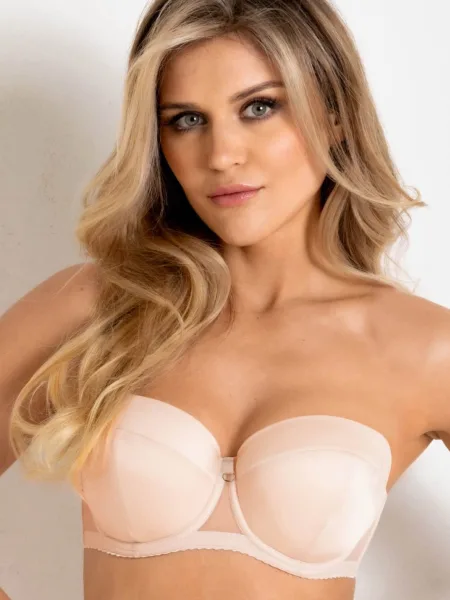
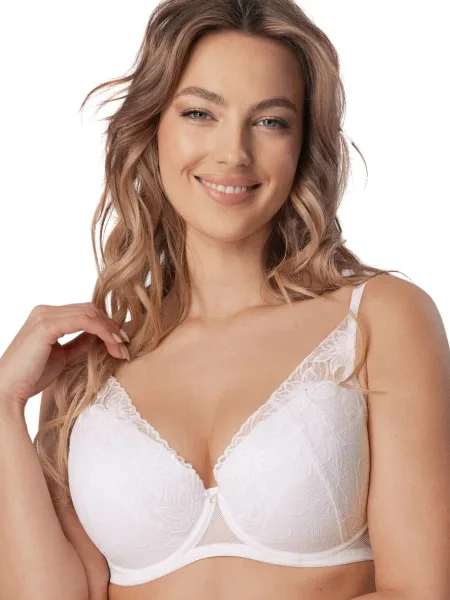
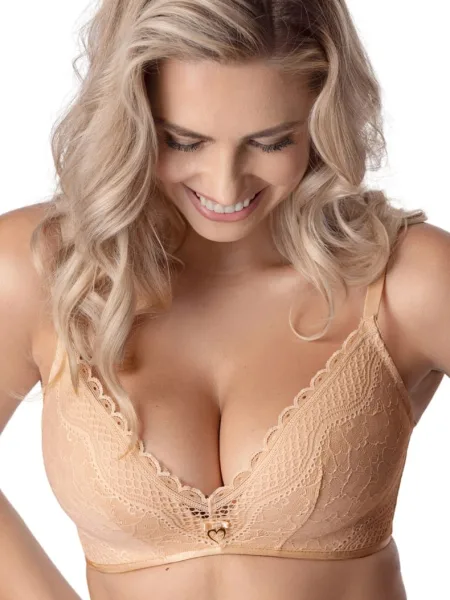
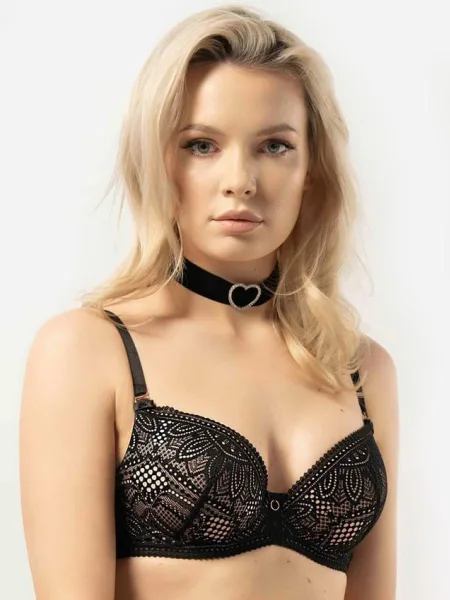
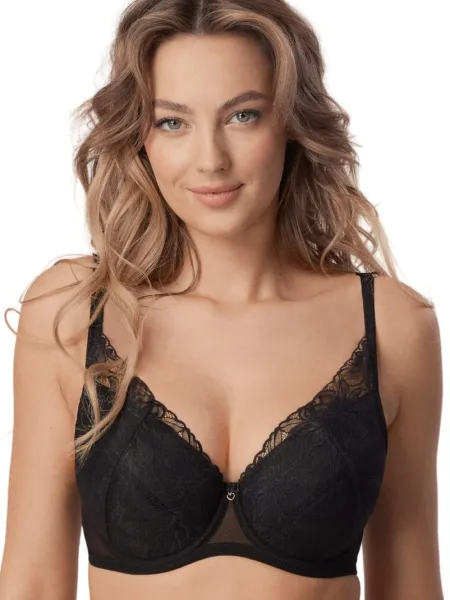
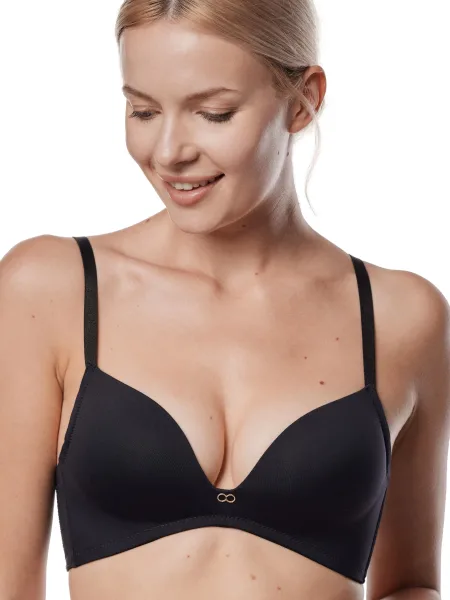
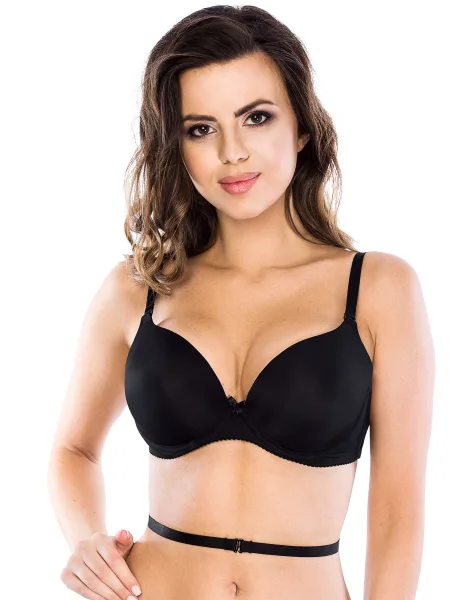
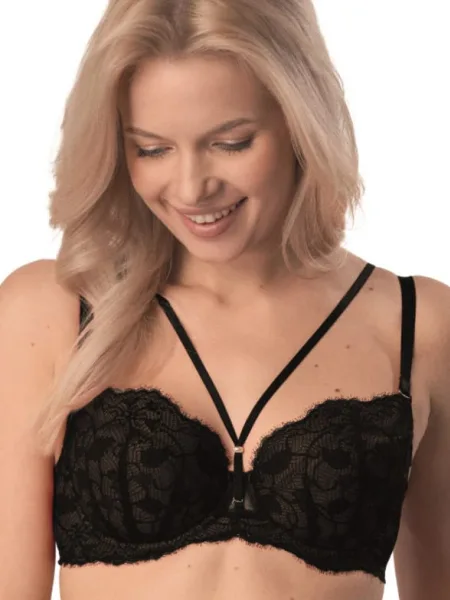
A push-up bra lifts the bust and directs it toward the neckline, using concentrated padding, shaped inserts or a graduated cup. In many models the foam is thickest at the bottom and outer edge of the cup and thins toward the top. Some carry fixed padding, others removable inserts that adjust the effect. European sizing, bands 65 to 95 with selected cups from A to G.
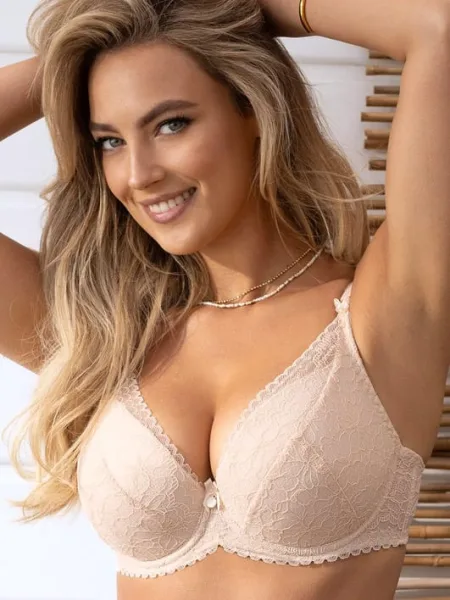

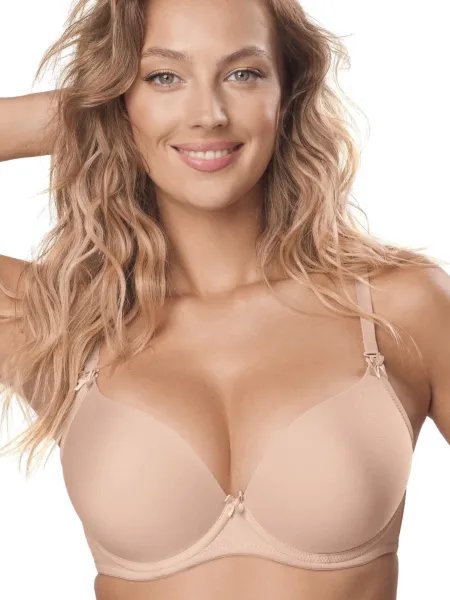
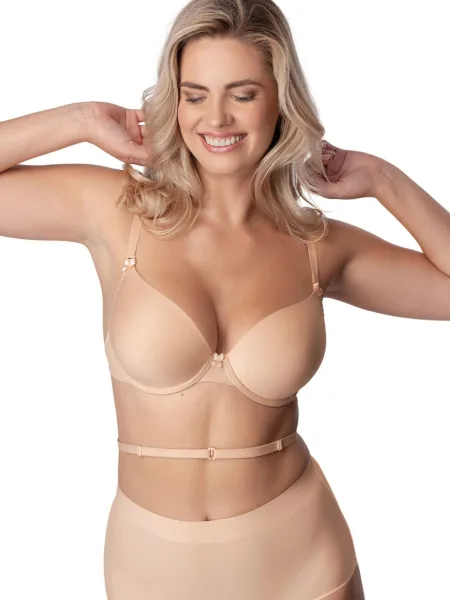
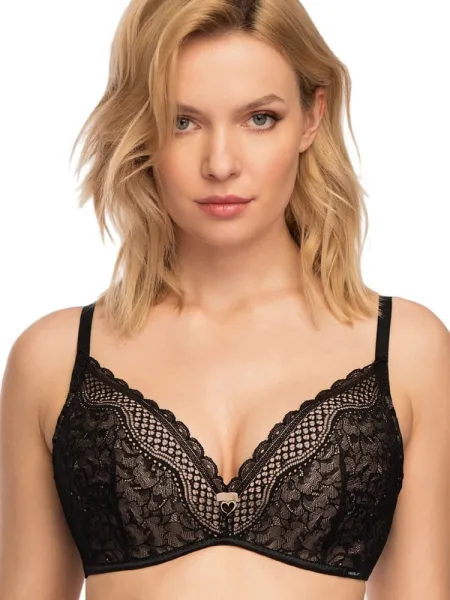
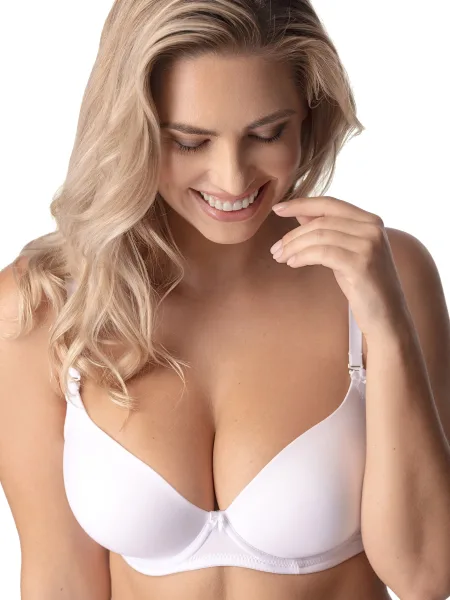
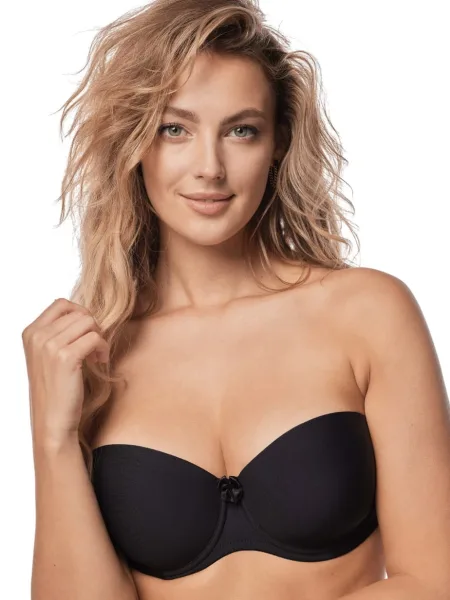
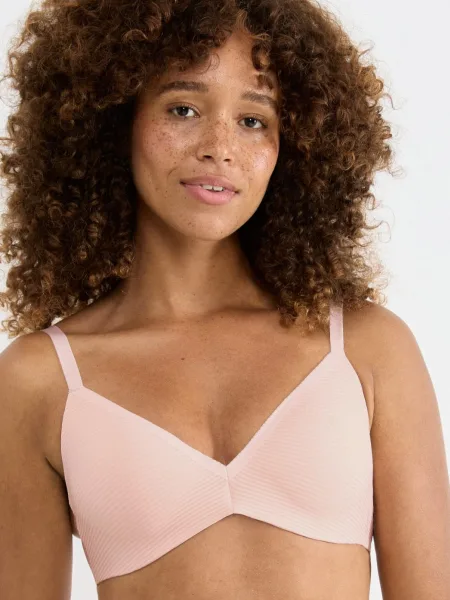
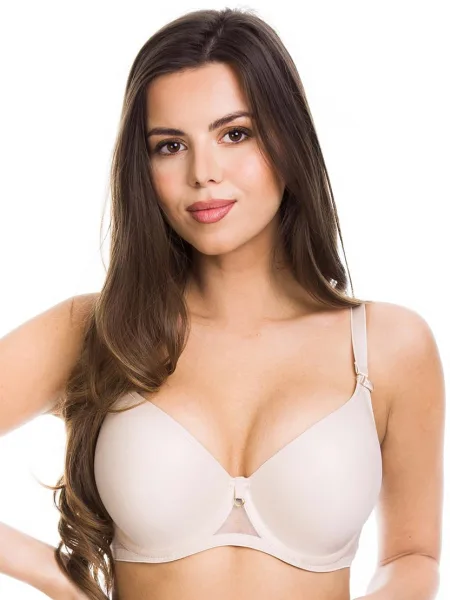
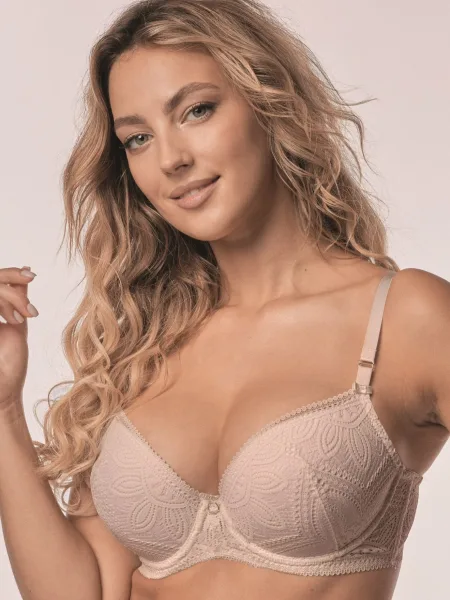
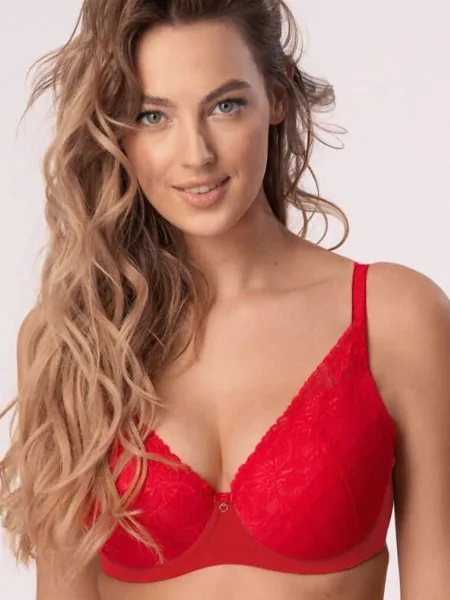

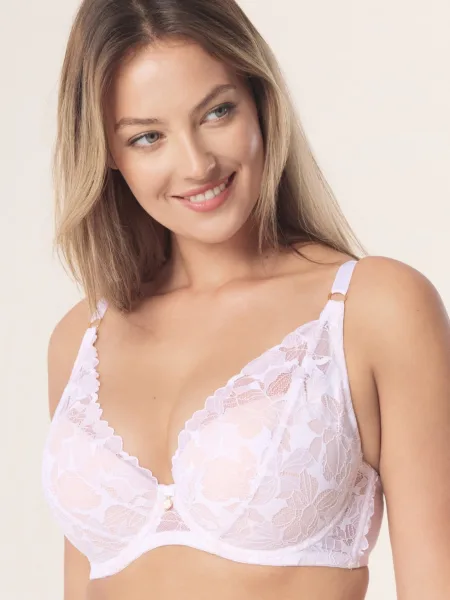
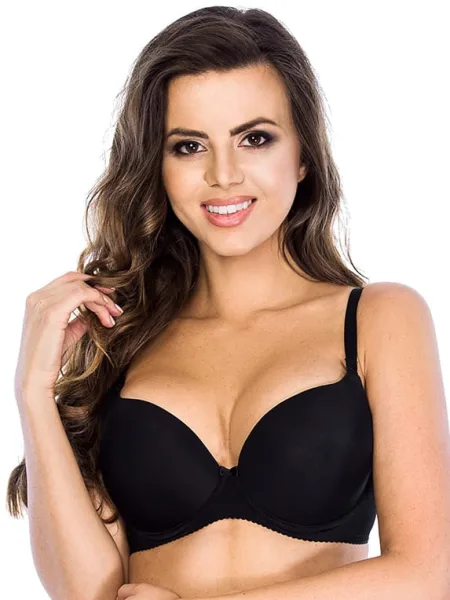
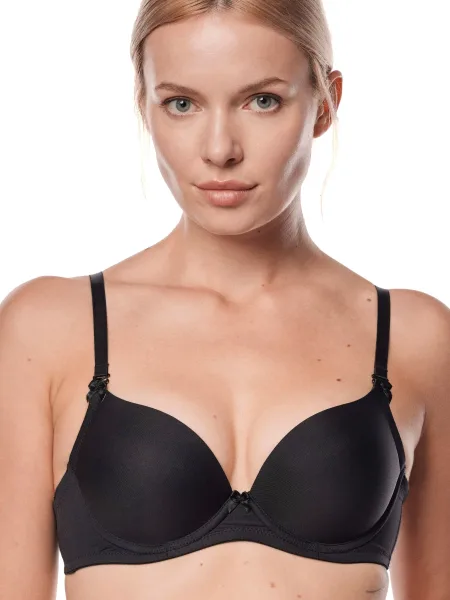


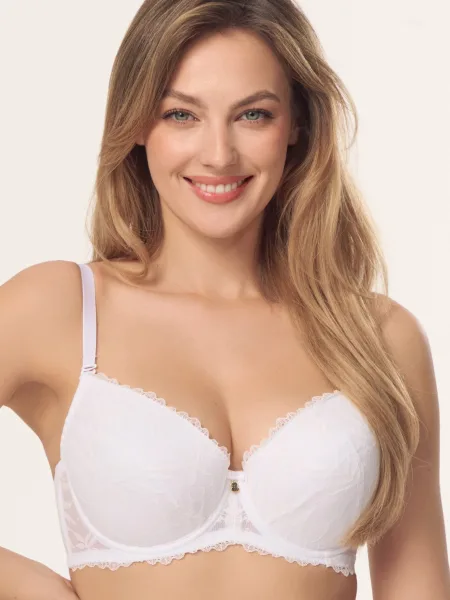
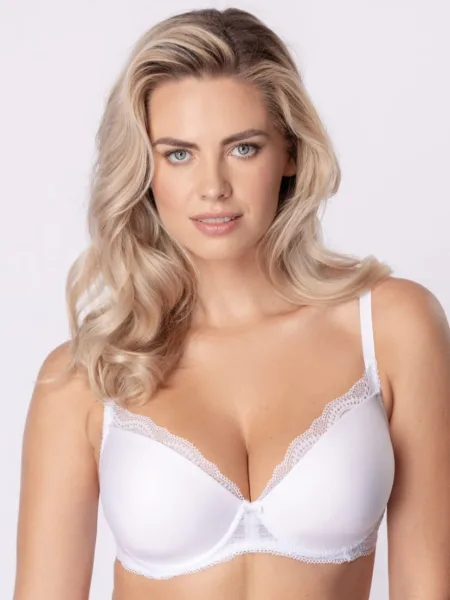
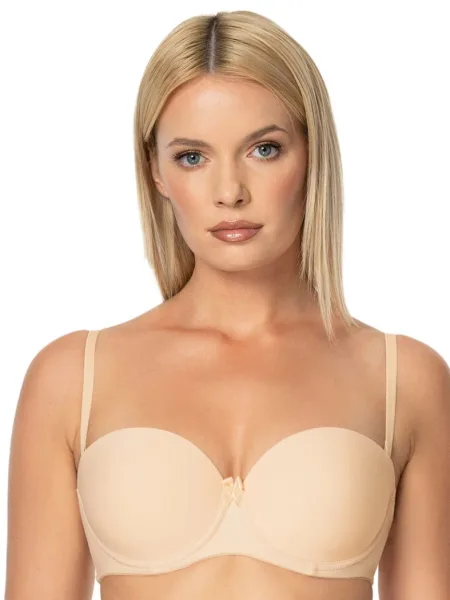
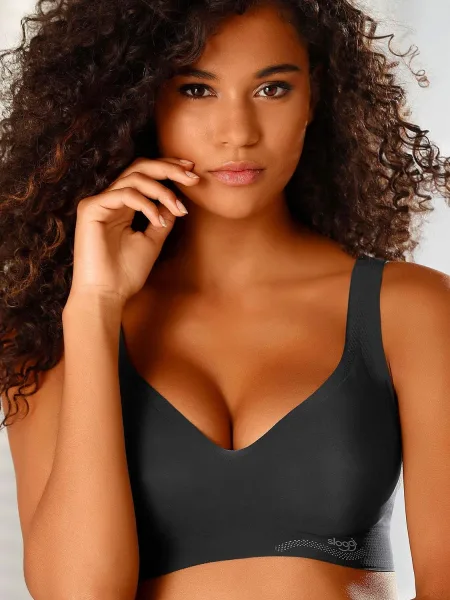
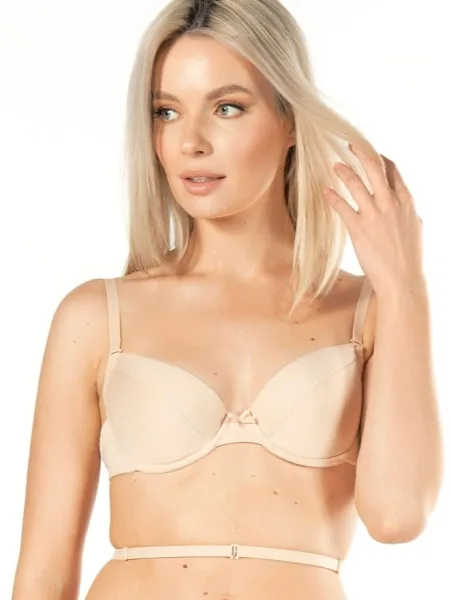
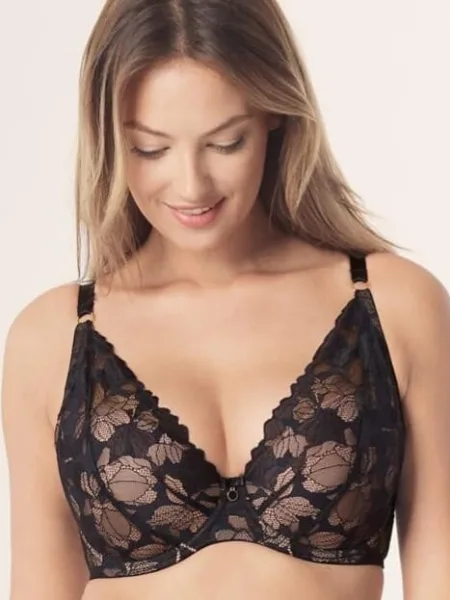
A push-up bra is bought for a visible change: more fullness at the neckline, a bust carried higher and closer to center. Because the effect is easy to see, it is easy to judge, and the useful questions are what creates it, how strong it will be, and what it asks of the fit.
A bra built to lift the bust and direct it toward the neckline, using concentrated padding, shaped inserts or a graduated cup that combines the two. In many models the foam runs thickest along the bottom and outer side of the cup and thins toward the top, so it sits under and behind the breast rather than over it. That placement is the main difference from a cup padded evenly for coverage and smoothness, though the cup's own geometry does part of the work in every construction.
Push-up bras work. How visibly they work depends on how the padding, the cup shape and the fit meet the individual bust, which is why the same model reads differently on different people.
The pad supplies volume from below, and the rest of the construction decides where that volume goes. Depending on the model, a lower center front can leave more open space between the cups, side panels or a more closed outer edge can turn tissue inward, and a molded profile can do quietly what a thick insert does loudly. The band anchors the system, a wire where present holds the cup's lower edge steady, and wireless push-ups lean on the molded cup and the band instead. The straps stabilize the upper cup and fine-tune its position, and tightening them past that point moves pressure onto the shoulders without improving the shape.
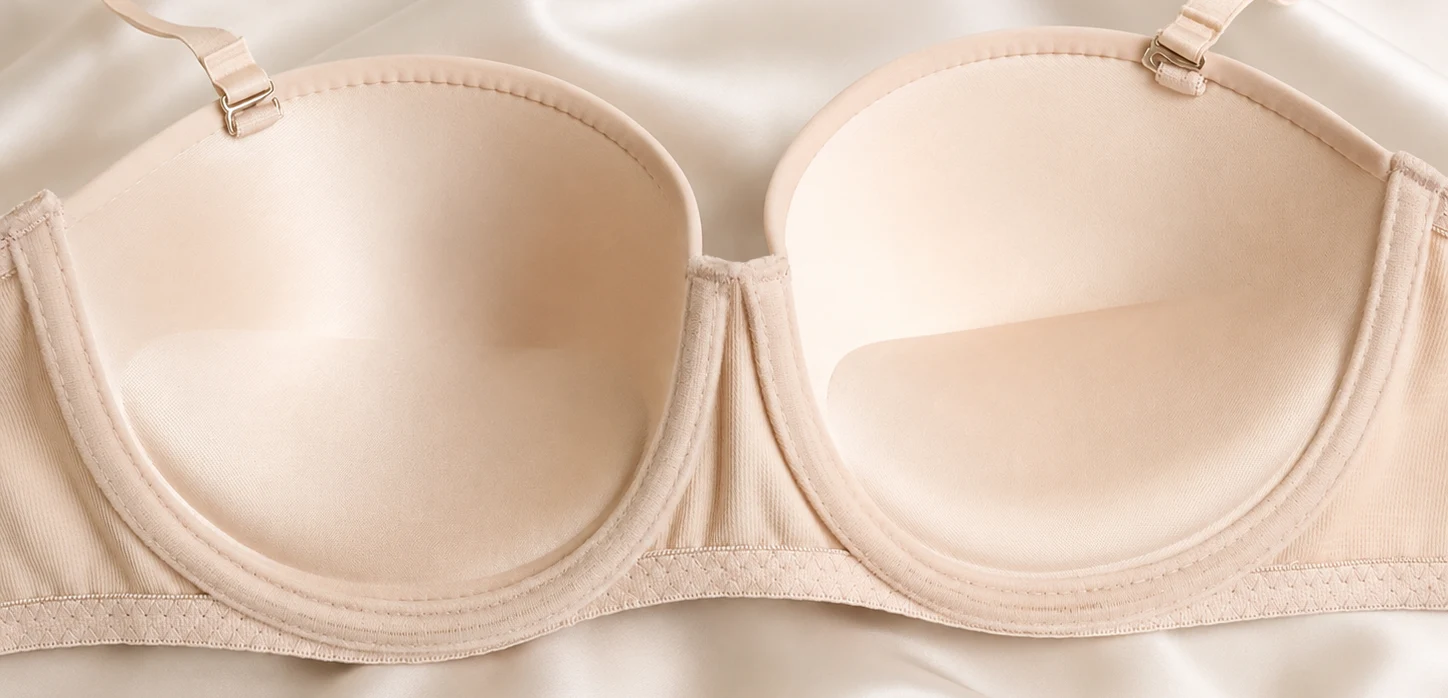
Enough to change how a neckline sits, and less than the biggest claims imply. Adds two cup sizes is retail shorthand for a visual increase in fullness, not a change in the size you order. Quantified promises differ model by model, so the number that matters is the one on the individual product page, and the heaviest constructions, double padding and gel among them, have their own page at super push-up bras.
What you actually see depends on several factors: how much foam the model carries and where it sits, how much tissue there is to move, whether the cup shape matches the breast shape, and whether the band is holding its position. Push-up is not limited to small cup sizes, the same construction simply produces a different visual change at different starting volumes. A clear change on one person and a subtle one on another can both be correct fits.
An evenly padded cup carries foam across its surface for opacity, smoothness and a small uniform addition, and depending on the build it can be seamed and fabric-led or molded with a preset outline. A push-up concentrates its volume to move the bust. That is the practical test: for a clean line under a T-shirt an even layer is enough, and padded bras is the page for it, while a changed position calls for the concentrated kind.
Several models here hand the choice to you. Where a product name says removable padding or adjustable volume, the inserts lift out of a pocket and the same bra covers two levels of enhancement. With fixed padding the level is a property of the construction, and pulling at sewn-in foam distorts the cup.
Push-up cups are graded around their padding, but the same nominal size can fit differently across models, because cup depth, wire width, neckline height and insert placement all vary. So read the signals on the body rather than trusting the letter.
Tissue over the top edge or escaping at the side says the cup lacks room or its shape does not match yours. Trying the next cup in the same model is reasonable when the overflow is clear. When the cause is a closed upper edge, a shallow profile or an insert sitting wrong, a bigger size of the same shape changes little, and a model with lighter or differently placed padding is the better trade.
A gap at the top can mean excess cup volume or height, a shape with more upper room than the bust fills, or an insert standing away from the body. A band that has ridden up lifts the cups with it and can create the same picture, so a level band is an early check, one cause among several.
Concentrated foam has an outline of its own. If the cup reads as a shape under fine knits, a smoother edge or lighter padding usually helps more than a size change. On a fuller bust the upper edge becomes the demanding part: cutting in means the cup lacks room or the neckline is too closed for the shape, not that a full bust rules push-up out.
For the lightest version of the idea, padded and push-up bralettes carry built-in or removable shaping in a lighter, often longline silhouette, gathered at bralettes. For no foam at all, with the shape coming from panels and fabric, start at unlined bras.